"Parenthood" (1989) with Ben Carpenter
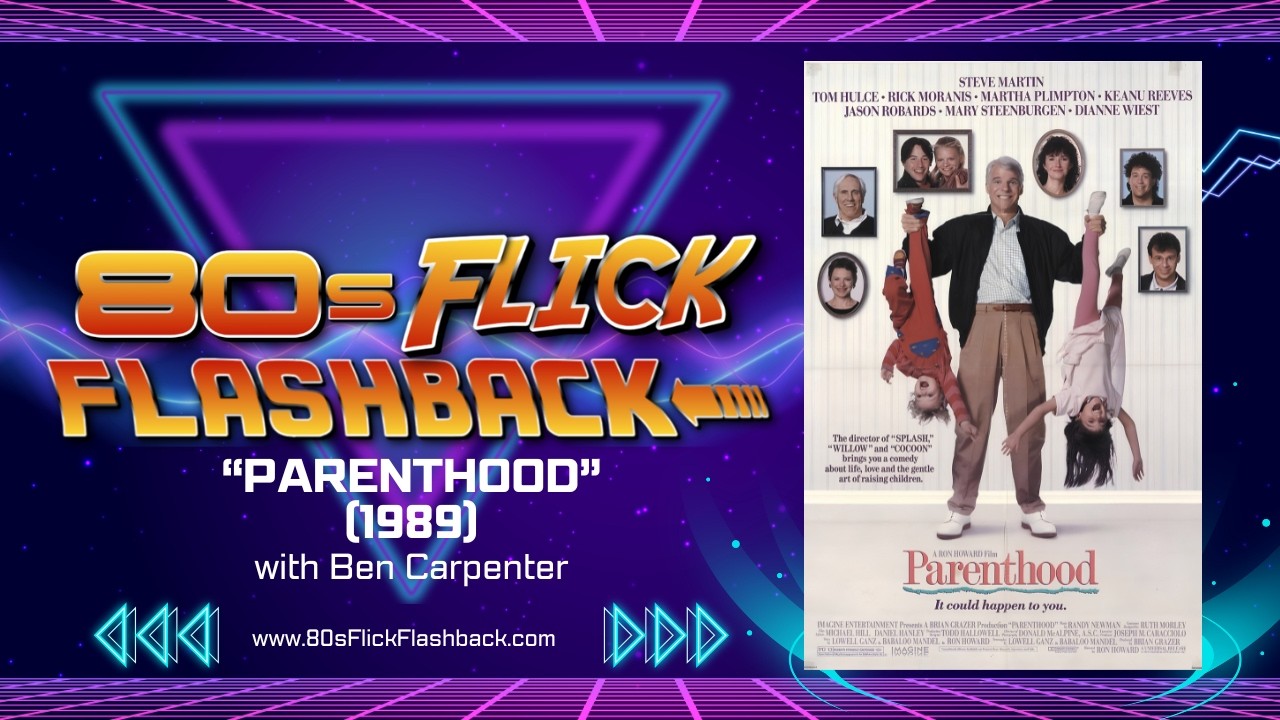
Buckle up for a trip in the station wagon! This week, Tim Williams is joined by Ben Carpenter to look back at the brilliant, messy, and laugh-out-loud reality of Ron Howard’s 1989 comedy-drama classic, Parenthood.
We dive deep into the chaotic world of the Buckman family tree—from mid-life anxieties and toddler pressures to teenage rebellion. We talk about the genius behind Steve Martin’s frantic physical comedy, the incredible emotional depth brought by a young Joaquin (Leaf) Phoenix, and Keanu Reeves' ultimate philosopher-slacker wisdom.
Plus, we reveal the therapeutic real-life inspiration that forced four Hollywood creators to write this script, and Ben steps into the hot seat for a pre-production edition of Risky Quiz-ness

 Apple Podcasts
 Spotify
 Castro
 RSS Feed
 Buckle up for a trip in the station wagon! This week, Tim Williams is joined by Ben Carpenter to look back at the brilliant, messy, and laugh-out-loud reality of Ron Howard’s 1989 comedy-drama classic, Parenthood.
We dive deep into the chaotic world of the Buckman family tree—from mid-life anxieties and toddler pressures to teenage rebellion. We talk about the genius behind Steve Martin’s frantic physical comedy, the incredible emotional depth brought by a young Joaquin (Leaf) Phoenix, and Keanu Reeves' ultimate philosopher-slacker wisdom.
Plus, we reveal the therapeutic real-life inspiration that forced four Hollywood creators to write this script, and Ben steps into the hot seat for a pre-production edition of Risky Quiz-ness. Does this 80s favorite still hold up as the ultimate family movie? Let's check the Nostalgia Meter!
Episode Highlights:
- The Origin Story: The chaotic family vacation that birthed a classic script.
- Ensemble Magic: Breaking down the performances of Steve Martin, Mary Steenburgen, and Rick Moranis.
- The Philosophy of the Ride: Exploring Grandma’s legendary rollercoaster speech.
- Risky Quiz-ness: Can Ben navigate the pre-production trivia files?
Support & Connect:
- If you loved this deep dive, please leave us a 5-star review on Apple Podcasts and hit follow!
- Help keep the independent projector running by becoming a partner at BuyMeACoffee.com.
- Find our full audio archive, original retro designs, and exclusive merch at 80sflickflashback.com and our TeePublic store.
Tim Williams: In the late 80s, director Ron Howard and producer Brian Grazer decided to tackle a subject more terrifying than an alien invasion or a high-stakes thriller. The absolute madness of raising a family. Through the eyes of Gil Buckman and his extended family, we were given an unflinching, hilarious look at four generations of a single clan trying to navigate the messy reality of adulthood. from hyper-competitive toddler schooling and teenage rebellion. To an unforgettable improvised birthday party rescue by a cowboy named Cowboy Gill. This film proved that family life isn't a race to be won. So break out the unbreakable pinata, shuffle the periodic table flashcards, and be careful not to grab the electric ear cleaner if the lights go out, as Ben Carpenter and I discuss parenthood from 1989 on this episode of the 80s Flick Flashback Podcast. Welcome to the show, everybody. I am your host, Tim Williams. So glad to have you here with us today. Joining me in the station wagon is a regular in the studio and a man who always brings an incredibly sharp analytical eye to our eighties deep dives. Please welcome back to the show, Ben Carpenter. How you doing, Ben?
Ben Carpenter: Hi, Gary. thought I'd start with that. That's my Diane Wiest impression I've been working on.
Tim Williams: â Yeah. Yeah. Yeah. That works. That works. So Parenthood. So, you know, we're this is releasing on Father's Day weekend. I've wanted to do this around Father's Day for a while. I think last either last summer or the summer before we did Mr. Mom and you were on that episode with me. So â just two dads talking about eighties movies. Let's let's, you know, maybe our side project.
Ben Carpenter: You Mm-hmm. Mm hmm. â yeah. yeah. Spin off.
Tim Williams: Yeah. So â so let's jump right in. When did you see parenthood for the first time?
Ben Carpenter: I did see it in the theater. So â I remember too much about seeing it in the theater, but I do remember that I did. â
Tim Williams: â Do you remember about so I you know, not to not to give away your full age, but like w how old were you or what age range were you when you saw in the theater? Like already a teenager, like preteen?
Ben Carpenter: I would have been, what month did it come out? August, okay, so I would have been 16, â almost 17, yeah. Not a parent yet, which really changes your perspective on this film, but, â you know, yeah, I was an older kid, yeah.
Tim Williams: August. August of eighty nine. Okay, alright, so you were yeah, you were you were older than me, so but right for sure. Yes, yes. Yeah. Yeah. So I I saw this in the theater as well. I saw this at I remember seeing this with friends at the we talked about when I lived in Fort Mead, Fort Mead, Maryland. They had a a movie theater on base, like a just a single single cinema that just ran like one movie over the weekend and some during the week. And so it had already been out for a while. So I'd seen the commercials. I was a big Steve Martin fan. I'd already seen Three Amigos. I'd seen Planes, Trains and Automobiles, I'd seen
Ben Carpenter: Mm-hmm.
Tim Williams: Dirty Rotten Scoundrel. So I was a big fan of his. And one was not what I expected. Of course, the trailers were we were a lot of the like one liners and the comedy. And I say on â especially going and watching it now, like a lot of the stuff went way over my head. And I was like the summer of 89, I was going into ninth grade. So I was like a year or two behind you. So, but still just, you know, I I appreciated the teenager portion.
Ben Carpenter: Right. Mm-hmm.
Tim Williams: But more from the teenager's perspective, more so than from the parents' perspective. But but yeah, so it was it I I didn't appreciate it until many years later, watching it as an adult, even before I was an actual parent, but just kind of understanding some of the situations a little bit better. But so how long has it been since you rewatched it before rewatching it for the podcast?
Ben Carpenter: Right. Yeah. This is one of those that, â know, I've back through a lot of movies from the 80s â when showed them to my kids â and was one that â never out at me as one that â I ready to share with â my â at point. So â man, it had been while. It had been, you know, maybe 20 years. Yeah, yeah.
Tim Williams: Right, right. Right, right. â wow, yeah. Any of your kids watch it with you this time? Okay. Okay. Her thoughts
Ben Carpenter: Yeah, my daughter watched it with me. Mm-hmm, mm-hmm, mm-hmm. Yeah, she, you know, she said she liked it. She didn't like laugh out loud at anything, but there's not a lot of like laugh out loud in this movie, even though it's, I guess, technically a comedy, yeah, so, but she said she liked it, Mm-hmm.
Tim Williams: Mm-hmm. Yeah, it's yeah, it's not that type of comedy. Yeah. All right, cool. Yeah. yeah. I watched it again probably within the last five years, maybe I would say. but that it had been probably since I was probably in high school. I probably watched it again on cable or you know, people were talking about it. And r of course when Keanu Reeves was a bigger star than he was when this came out, you know, everybody wanted to go back and watch Keanu in it.
Ben Carpenter: Mm-hmm.
Tim Williams: Well yeah, but I, you know, it was part of a Steve Martin bundle package that I got a couple of years ago. So like I was just, you know, one day or one week I was just like, I'm gonna watch all these Steve Martin movies. And it's, you know, it's a good addition to his to that set. I think that set's got like â The Lonely Guy, â Father the Bride. So it's a good kind of â hodgepodge yeah, Dead Men Don't Wear Plaid. Like it's a good mix of like his eighties and kind of nineties type â
Ben Carpenter: Yeah, it's a good mix. Yeah, I'd throw in LA story. I always liked LA story and that was a very different movie for him too.
Tim Williams: movies, but but yeah. Yeah. Yeah. That was another one I didn't appreciate. Yeah. Yeah. That was another one I didn't appreciate till I got older. But yeah. â but yeah. I'm but I'm a huge Steve Martin fan. I I'm watching I'm always behind, but actually watching Only Murders in the Building right now the last season. So I always like I I I watch it and then I forget about like â I haven't finished the seasons. But him him him and Martin Short is so funny.
Ben Carpenter: Mm-hmm. Yeah, same here. I'm on season. I think we are about to start season three. So I know we're several seasons behind at this point.
Tim Williams: Okay, maybe whatever the last season now is it season three or season four now? Whatever the last season is, I'm like on episode three, I think. So, but anyway, but yeah. right, well, now it's time to see if you actually know the DNA of how this classic script came together. We're heading into our trivia segment. It's time to play â Quizness.
Ben Carpenter: Yeah, good stuff.
Tim Williams: Today we're looking specifically at the origins and the pre-production files of this 1980 comedy drama. I've got five statements for you, Ben. Your job is to tell me if they're true or if they're false. So take a deep breath.
Ben Carpenter: Okay, I did not do my homework for this one really I did not do a lot of like background Studying for it. So we're just flying off the cuff on this
Tim Williams: Yeah, I would say this one, you know, I don't try to make them difficult, but this one I didn't I didn't know a lot about the making this movie before I did before doing the research. So this might be a little, you know, I won't be I won't be upset if you miss a lot, because I probably would have missed a lot if I was the one guessing. But anyway, we'll see how the people let's see how the how the fans at at at home do those listening. So all right, here we go. Number one, true or false. The entire concept for the movie was conceived.
Ben Carpenter: Okay, okay. give it my best shot.
Tim Williams: By Ron Howard, Brian Grazer, and screenwriters Lowell Gans and Babaloo Mandel during a miserable, chaotic flight where they all had their kids with them. True or false?
Ben Carpenter: That sounds very plausible, so I'll say true.
Tim Williams: You are correct. During a flight to a film premiere, the four filmmakers realized they were completely outnumbered by their own children who were crying and misbehaving. They spent the flight swapping horror stories about their own shortcomings as parents and realized that was the exact movie they needed to make next. So â I love that, you know, a lot of the which we I didn't really get too much into in the trivia, but several of the things that happened in the movie are drawn from real life exp real life experiences, which I think is hilarious. So â all right. So number two, when developing the script, the writers collectively had a combined total of exactly 15 children, and almost every single major plot point in the movie was lifted directly from a real life event that happened to one of their kids. I think I just answered that question for you, but is that true or false? Sorry, I forgot that was one of the questions. Yes, between Howard Grazer, Gans, and Mandel, they had 15 children total.
Ben Carpenter: Yeah, you kind of did. So I'll go with true.
Tim Williams: From the kid losing his retainer in the trash to the toddler banging his head against the wall, virtually the entire movie was a therapeutic vintage session based on their real lives.
Ben Carpenter: Yeah, I experienced the losing the retainer in the trash and digging through, yeah, back behind, like almost exactly the scene from the movie.
Tim Williams: I did too. Yep. Well, I said I you. â yeah. was I was the kid in that scenario. I was not the parent, but I did lose my retainer. And the the bad thing is I found it after they had gone through the trash. I had wrapped it in a paper towel or a napkin and it was in my pants pocket, but I didn't realize that's what it was. So my dad was not too happy about that. But anyway. â â all right, number three. The role of Gil Buckman was originally written specifically for Tom Hanks, but he had to turn it down due to his commitment to filming The Burbs and Turner and Hooch. True or false?
Ben Carpenter: Let's see, we've had two trues in a row, even though that sounds for sure, I'll go false.
Tim Williams: There's a man who knows how to play the odds. It is false. The role was actually written with Steve Martin in mind from the very beginning. Ron Howard wanted Martin's specific brand of frantic highwire physical comedy to balance out the deeply emotional and stressful dramatic beats of Gil's midlife anxieties. So I could see Tom Hanks in this role, but more the 90s Tom Hanks. I think he was, you know, he had he had just done yeah, and he yeah, he was a little young. He had just done big.
Ben Carpenter: You Sure. Right. He was a little young. Yeah.
Tim Williams: Which was kind of like his first kind of foray into more of a like comedy drama role. But â but yeah, I think Steve Martin was was was cast pretty well. So right. Number four, true or false, Joaquin Phoenix, who was credited as Leaf Phoenix in this movie, was cast as the withdrawn teenager Gary after the casting directors saw his performance in the nineteen eighty-six space camp movie Space Camp, which you and I also covered on the podcast.
Ben Carpenter: Mm-hmm. We did, yeah. Yeah, he was Lee Phoenix in that one too, yeah, I remember. Sure, I'll go true again. Oh no!
Tim Williams: Mm-hmm. Sorry, this was false. While he was in Space Camp, he actually won the role of Gary because Ron Howard was incredibly impressed by his quiet emotional depth during a live reading. Howard later noted the young actor brought a raw vulnerability to the character that's completely shifted that I'm sorry, that completely shifted how they balanced the film's tone. So so yeah. Very different character than he was in space camp. So yeah. All right. Well, so far you've you've gotten three out of four. Let's see if you can get
Ben Carpenter: Yeah.
Tim Williams: Four out of five. Here's the last one. The studio hated the title Parenthood because they thought it sounded like a boring documentary, and they fought to have the movie released under the title The Buckman Diary. True or false?
Ben Carpenter: That sounds like something some bonehead exec would say, because the Buckman Diary is a much more boring title. â Okay, I'll just coin flip. I'll go...
Tim Williams: Ha ha ha. Ha ha ha. â Good job. The working title during pre production was actually kids. The team eventually changed it to parenthood because they realized the film wasn't actually about the children at all. It was entirely about the anxieties, growth, and struggles of the adults trying to raise them. So good job. Got four out of five. He swept the series. Yeah. Yeah. Well, let us know how well you did. If you were playing along at home, send us an email message or a social media post or leave us a comment right here on YouTube if that's where you're watching it from. So
Ben Carpenter: Hmm. Yeah, not bad. I'm happy with that.
Tim Williams: All right, well, let's talk about the cast. As I was telling Ben before we started recording, it's a pretty lengthy cast. You know, it was really marketed that way. But a lot of the cast we've talked about in other episodes. So some I will just mention and others I may do a little bit about their filmography. But let's start from the top, of course, Steve Martin as Gil. â we've previously covered him in Three Amigos, Planes, Trains, and Automobiles, and Dirty Rotten Scoundrels. So we're not gonna go into their other filmography, but â in this film, he plays the father of several children, three and four by the end. In reality, Martin did not become a parent until he was years old in twenty twelve, which I don't think I knew that. I did not know he he was that I knew he wasn't married for a long time, but I didn't realize that he didn't have a child until he was sixty-seven, so but and I I yeah.
Ben Carpenter: Wow, I didn't know that either. Wow. Well, it's never too late, I guess.
Tim Williams: And I did read that like before making the movie he had no desire to have kids at all. Like that he just didn't want kids. But then after making the movie and spending time with the kids, he was like, â maybe maybe one day. You know, I don't think he was in any kind of rush. But â yeah. Yeah, yeah, yeah. Exactly. Exactly. but yeah, but I I think Steve Martin was a perfect choice, as we already said, you know, he he that's who they had in mind from the beginning. I think they it was a good choice. So
Ben Carpenter: Yeah, apparently not. He waited another 20 something years. â yeah. Mm.
Tim Williams: And then we he've we've then we've got his wife Karen played by Mary Steen Burgeon. â we've covered her in Back to the Future part three from 1990, which is part of our Back to the Future, even though it's a nineties movie. We me, we lumped it in with all the Back to the Future movies back in the day. But if she's also from â What's Eating Gilbert Grape in ninety three, Philadelphia, also in ninety three, Nightmare Alley in 2021. She's also played mothers in a string of comedy films, including Elf.
Ben Carpenter: Mm.
Tim Williams: Stepbrothers for Christmases, The Proposal, The Help, and Happiest Season. Just to name a few. But Yep, she's played a mom a lot. So according to the interview in the DVD extras with composer Randy Newman, the soundtrack song I Love to See You Smile, which is perhaps his most beloved, was written with Mary Steen Mergen's smile in mind. Nice little nice little â she does have a nice smile. I'll give her that. So
Ben Carpenter: Yeah, sure.
Tim Williams: Yeah. I thought they were a pretty decent decent couple, like decent chemistry. Yeah. Married couple. Mm. Had some good scenes together. All right.
Ben Carpenter: Yeah, I thought they were a very believable â husband and wife. Now wait, she already with Ted Danson by this point? I don't know when they got together.
Tim Williams: Ooh, that's a good question. I I think that was later because I think he might have still been with Whoopi Goldberg at this point, because wasn't he with her in the eighties? Yeah. I don't think they got together until like the middle to late nineties, I think. So yeah. All right, then we had Diane Weist as Helen. â of course we covered her in Footloose as well as The Lost Boys, but she was also in
Ben Carpenter: Okay. â yeah, I forgot about that. Yeah. Yeah, you're probably right.
Tim Williams: Bright Light's Big City in 88, Edward Scissor Hands in 1990, The Bird Cage in 96, Practical Magic in 98, The Mule in 2018, and I Care A Lot in 2020. Diane Weist and Mary Steen Burgeon were best friends and worked as waitresses at the Magic Pan and other Los Angeles restaurants in the 70s before they hit it big in Hollywood and before they were cast as sisters-in-law in this movie. They have both won Academy Awards in their career. So but yeah.
Ben Carpenter: Yeah, well, I mean, didn't you listed off those other movies she was in. I don't I mean, slight to her, but I don't really remember her being in that much. But yeah, when you mentioned those movies, â I picture her in those. But yeah, she kind of had a gap there, I guess, where she wasn't in too much â for while. Yeah.
Tim Williams: Mm-hmm. Ha ha ha. Mm-hmm. Yeah. Yeah. She had a couple couple of couple of you know gap yeah, a couple of gaps there. But yeah. But I I liked her. I mean, you know, I liked her in Footloose, I liked her in â Lost Boys. I think once again, I think character if if it wasn't written specifically for her, she's perfectly cast. That that seems to be like the character she plays is kind of similar to the other kind of moms that she played that I'd seen. Yeah.
Ben Carpenter: Mm-hmm. â yeah. Oh yeah, she's great in this and in fact to get maybe maybe more laughs than Steve Martin in a movie with Steve Martin. would say that like she's got some really good timing in this when she delivers some of her lines and she made me laugh probably more than Steve Martin did watching it again the other night.
Tim Williams: Yeah, yeah. Right, right. Mm-hmm. Mm-hmm. Yeah. Yeah. All right, moving on the list, we got Jason Robards as Frank, the of the family. His other notable films include Long Day's Journey into Night in Sixty Two, Once Upon a Time in the West, and 68, Tora Torah, Torah, and 1970. Also in nineteen eighty-nine, he was in Dreamy Little Dream with the two quarries. In ninety-three, he was in Philadelphia, ninety-eight, enemy of the state, and Magnolia, nineteen ninety-nine. But the â incomparable voice of Jason Robards. He just has that very distinctive voice for sure. But yeah. But I liked him in this.
Ben Carpenter: right. Yeah. Yeah, yeah, it's sort of sort of the most, I don't want to say relatable, â just sort of the, know, sort of representing a lot of the struggles of late parenthood when they get a little bit older. â It's sort of, I guess, me much more watching it the other night than it ever had before.
Tim Williams: Ha ha ha. Mm-hmm. Mm-hmm. Right, right. Yeah. I think I had a little more sympathy for him the last couple of times I've watched it. I don't think I thought of him as very as a very good father in the first time I watched it, but but yeah. Definitely definitely felt a little bit more more sympathy for him for sure. And then we've got Rick Moranus as Nathan. Of course, we've talked about him in Ghostbusters, Ghostbusters 2, Little Shop of Horrors. But of course, he was also in Space Balls in 87, Honey I Shrunk the Kids in 99, as well as its sequels in 92 and 97, My Blue Heaven from 1990, and The Flintstones in 1994. very different role for him than I was used to in this, you know, a little more straight-laced. I loved his character though. Like even watching it now just like that.
Ben Carpenter: Mm-hmm.
Tim Williams: the very type A, like very like future focused parent, like, you know, the helicopter parent for sure. â yeah.
Ben Carpenter: Yeah, yeah, I could relate to him too. I think, â you know, we were the kids were younger, we a little bit in that direction sometimes and had to sort of catch ourselves â and saying, let's just let them be kids. â But â yeah, â he when the lights go out and he explains what a blackout is to â his little that was that made me laugh.
Tim Williams: Mm-hmm. Mm-hmm. Mm-hmm, mm-hmm. Yeah. Yeah. â yeah. â
Ben Carpenter: But I love Rick Moranis in everything he was in back in the day.
Tim Williams: Mm-hmm. Mm-hmm. Yes, absolutely. And then we've got Tom Hulse as Larry, best known for his portrayal as Wolfgang Amadeus Mozart in the Academy Award-winning film Amadeus from 1984. He also played the role of Larry Pinto Kroger in Animal House in 78, and he's the voice of Quasimoto in Disney's animated The Hunchback of Notre Dame from 1996. So boy Larry, that that the character of Larry is probably the
Ben Carpenter: No.
Tim Williams: I don't want to say the most memorable, but I think it leaves the most lasting impression. I think for me, just that that, you know, I don't know, maybe, maybe because I shouldn't say every family, but like I know in my family I have someone like that that's, you know, always needs something, always trying to pull one over on the family, or always, you know, he's got some kind of scheme that he's trying to pull together and everybody you know, everybody's kind of rolling their eyes. But, you know, he was the dad, dad.
Ben Carpenter: Yeah.
Tim Williams: at the beginning of the movie he could do no wrong, like he is no you know, so â yeah.
Ben Carpenter: Right, right. He comes in like all big time with his sunglasses on and act acting like he has a lot of money and turns out the opposite is true. But yeah, like you said, almost every family has. I mean, you know, that's that's kind of one of those things where once you decide to write a movie like this, so of that stuff probably just writes itself because â I not not to diminish the talent that went into it, but but it's just, you know,
Tim Williams: Yeah, â yeah, yeah. Mm-hmm. Yeah, yeah. Mm-hmm. No, of course not, yeah.
Ben Carpenter: Like you said, everybody has all these different stories they experienced and everybody has a â like that in their family that they can work into the script. â
Tim Williams: Mm-hmm. Yeah. Yeah. And, you know, we're we're not finished with the cast, so I d will I kinda think a good place to interject here. But I think it it one thing one reason why I think it's such a successful movie and why it spawned two different TV shows, which was told we'll talk about a little bit later. But I think it does a good it does a good job of showing complex families of like lots of different types. You know, everybody raises their kids a little different. Everybody's got their own little quirks or their, you know.
Ben Carpenter: Yes. Right.
Tim Williams: There they're things that are going on. So they're really it's a true true ensemble film where everybody kind of gets their equal time and they're you know, it is primarily about Gil and his family, but I feel like the other family members and their stories get told very well. and, you know, even though it is very much, you know, coming from, you know, we talked about Lil â I always get their names wrong. The two the two writers, Mandel, Babaloo Mandel and â Lance
Ben Carpenter: Lowel Gans. Yeah.
Tim Williams: Lowell Gans, I always want to put Lowell and Gans together and call it Lands. But you know, they were they were sitcom writers. So it is kind of like a nice bow tie ending at the end where everybody kind of gets their real realization all at the same time. Of course, life doesn't always work out that way. But for the for the sake of telling a story, I think it I think they did a good job of piecing putting all the pieces together and making it work, â with the multiple storylines and the multiple characters. So
Ben Carpenter: Right. Yeah. Yeah. If your name is Babalu, you really have no choice but to be a sitcom writer or like work at the circus or something, I guess.
Tim Williams: Yeah, yeah. Yeah. it's like, yeah, it's one of those things like, was that your was that your given name? And it it it and right. It made me think we were and side note, but my dad and I were watching I went over to my dad's and we were watching the Braves game earlier today and â I think one of the New York Mets had a â player and his name was Rowdy. That was his first name. I can't remember his last name was, but I was like, I'm sure his mama didn't name him Rowdy, you know?
Ben Carpenter: Yeah, I don't know. sure. I would hope not. Mm.
Tim Williams: It's like there were no quotation marks around it, but that was the name on his you know, on his baseball card. Right. Yeah.
Ben Carpenter: No problem. Usually that's not what you're hoping for when your baby is born. Man, I hope he's rowdy.
Tim Williams: â man. All right. So moving right along. Martha Plimpton as Julie. â we talked about her on the Goonies episode. She was also in the Mosquito Coast in 86, Shy People in '87, Running on Empty in '88, and Beautiful Girls in 1996. She's still working today. she was I remember her being in a couple episodes of â The Good Wife, which I was a big fan of that show â when it was on. So excuse me. â
Ben Carpenter: Mm. Mm-hmm.
Tim Williams: Martha Plympton was actually bald at the beginning of filming because she had just finished Silence Like Glass in which she played a cancer patient. She wore a wig throughout filming and a hair piece when Julie has a mohawk. This is probably why halfway through the movie Julie and boyfriend Todd shaved their heads. Ron Howard was sick of the wig and wanted Plimpton to show her real hair finally. So I guess I guess the short li it had grown enough to be kind of the short hair for the little buzz cut on the side, but yeah.
Ben Carpenter: Huh, that's interesting. Yeah. Right, right.
Tim Williams: And â another fun fact, she plays the older sister of Joaquin Phoenix. In real life, she dated his older brother River Phoenix for nearly five years. River Phoenix and Plimpton also appeared in two other movies together. So yeah. I'd kinda forgotten that she had dated River Phoenix, but yeah. Yeah.
Ben Carpenter: â yeah. Yeah, me too.
Tim Williams: And then Keanu Reeves as Todd with only one D, which I noticed when he was on his racing helmet. It was TOD, â double D on Todd. So of we talked about him on our Bill and Ted's Excellent Adventure. He also â played â he was also in the sequel, Bill and Ted's Bogus Journey 91. He gained praise for playing a hustler in the independent drama My Own Private Idaho in ninety one.
Ben Carpenter: â okay.
Tim Williams: And established himself as an action hero with leading roles in point break in ninety one and speed in ninety-four. And of course, he great gained the greatest stardom or his greatest stardom with Neo in the Matrix in 1999. But of course, you know, it's funny. You have like the generation that knows him as Bill and Ted, the generation that knows him as, you know, Speed, the generation that knows him as a matrix. Now you got the generation that knows him as John Wick. So it's like he's he's he's kind of
Ben Carpenter: bright. But the â yeah, yeah. But
Tim Williams: Decades of iconic characters, yeah.
Ben Carpenter: I assume Bill and Ted came out right around the same time as this.
Tim Williams: It did, but it was like week week and we covered it. It was actually filmed in eighty seven and shelved for two years. So so it was well in the can, but I think â I'm trying to think I when it came out. They might have come out like really close to the same time. Cause I think Bill and Ted's Excellent Adventure came out like late summer of eighty nine as well. So that might those by the f they was might have been in the theater around the same time. Yeah.
Ben Carpenter: â wow. Okay. Right, okay. Yeah, it's strange to think that just from 10 years, in 10 years he went from and Ted and this â Neo in The Matrix. That's, yeah.
Tim Williams: Mm-hmm. Yeah, yeah. He had a couple of duds there at the in the nineties though. So after speed. So
Ben Carpenter: Yeah. Yeah.
Tim Williams: But I still love Speed. That's one of my favorite action movies. â my wife likes to watch them. â yeah. Yeah. All right. a name that I do not would not recognize, but definitely recognize the actress, Harley Jane Kozak as Susan, Rick Moranis' â wife in the movie. She made her feature film debut in the slasher film The House on Sorority Row in nineteen eighty two and had a recurring role as Mary Duvall in the soap opera Santa Barbara between between nineteen eighty five and eighty nine.
Ben Carpenter: Yeah, that's one I haven't seen in a long, time either. Mm-hmm.
Tim Williams: She later had supporting parts in Clean and Sober in eighty eight and when Harry Met Sally in eighty nine, before this was her this was her first starring major studio film. And then she followed that up with Arachnophobia in nineteen ninety. So but yeah.
Ben Carpenter: Yeah, she looked familiar to me too, but I had to look her up as well. I had no idea what her name was. was kind of surprised that she â really that though, she really wasn't in, she hasn't been in very much â recently. when I say recently, I mean the past 30 years. â Yeah, guess she kind of hung up the acting. â
Tim Williams: Mm-hmm. Yeah, yeah. No, she hasn't, yeah. Yeah. Yeah. Mm-hmm.
Ben Carpenter: gig after a while, but yeah, she was good too.
Tim Williams: Yeah. She was good in this, yeah. I did I liked her character a lot. I wish they one I will say the one scene that I did I thought was gonna have some kind of payoff or would have come back around is when she's â when she gets upset with Rick Moranis like about the middle of the movie and she goes in the closet and she pulls out like her bag of like chocolate where she's obviously eating like the junk food because I know they made the comment they were power eating or whatever, but I was waiting for that to come back up somewhere.
Ben Carpenter: Mm-hmm.
Tim Williams: at the end. I don't think it ever kind of got never got â it was no payoff, like it never got brought up or never she was never got caught with it or anything like that, which I thought was interesting. So if it was just a plot hole or something got yeah, has to be, yeah. I didn't I didn't have any deleted scenes to watch â when I was on this one, so
Ben Carpenter: Hmm. Yeah. Brian. Hmm. Yeah. Maybe it, maybe a cut scene or something that, yeah.
Tim Williams: And then â Dennis Dugan as David, â Steve Martin, Gill's â boss. â we just talked about him in our Can't Buy Me Love episode a few months ago, but he's most notably known as the director of most of the Adam Sandler movies. So when he left acting, he I think this was his last film role before he started directing.
Ben Carpenter: â really? Wow. I did not know that. Which Adam Sand... So did he like to Billy Madison and Happy Gilmore and those? â wow.
Tim Williams: Yeah. Mm-hmm. Yeah, like all the like the like yeah, the the goofiest of the goofy are most of them were directed by Dennis Dugan. So yeah. â try. I try to get try to try to help everyone know. All right, we're moving right along, almost done. Joaquin Phoenix, we've mentioned already, as Gary, the his first major role was in Space Camp in eighty-six, followed it up with this Parenthood in 89.
Ben Carpenter: Well, I'll be. You learn something every day from this podcast, don't you?
Tim Williams: In the early 90s, he received critical acclaim for supporting roles in To Die for in 95 with Nicole Kidman and Quills in 2000. But he gained most â popularity from his Oscar-nominated performance as comedist in Gladiator in 2000. He had success with the horror film Signs in 2002, as well as The Village in 2004. And he also won a Grammy Award, a Golden Globe Award, and a nomination for Academy Award for Best Actor First Portrayal of Johnny Cash in the biopic Walk the Line in two thousand five. So yeah.
Ben Carpenter: Yeah, a very talented kid at his age when he made this. mean, just the scene where he calls his father â â just see it all written on his face. It's really acting for a kid his age. â
Tim Williams: Mm-hmm. Mm-hmm. Yes, yes. Mm-hmm. Mm-hmm. Yeah, for sure. I wonder if that's like if that's the scene they had him read for the for his audition. So, but but yeah, I I loved I loved his care I love the arc of his character, like the very kind of quiet, you know, reserved. Then you find out like he really wants to spend time with his dad. His dad, know, turns him away pretty much. And then for him to find a bond with Todd, â Keanu Reeves's character, and then eventually like
Ben Carpenter: Mm-hmm.
Tim Williams: you know, liking that her his mom's boyfriend, the biology teacher, I think. Was it biology? Yeah. So I knew it was science. Some kind of science. It was biology. Yeah. So yeah. So I I did like his arc for sure. So Ryan as Marilyn. â I'm not really sure. I think that was the â think that was Jason Robard's wife, the mom, the or you know, the matriarch of the family. â
Ben Carpenter: Yeah. Yeah, I think so. Mm-hmm. Okay. Mm-hmm.
Tim Williams: She's been in a couple of movies, but she's most well known as the wife of actor and director Leo Penn and the mother of actors Sean and Chris Penn. So and I think she was actually in â she has a scene with Sean Penn in at Close Range, 'cause I'd watched that probably like a year ago or so and I'm reading that. So
Ben Carpenter: Hmm. Okay. Yeah. She didn't really have much to do in this other than just sort of have a disapproving look on her face through most of
Tim Williams: No. â Yeah, exactly. Exactly. Yeah. We don't have room. Room in the house for cool. So did he say cool? Cool. Yeah. All right. And then â Kevin, the main kid, I guess, or the main â main son that had â the biggest plot point was played by Jason Fisher. â he also played the character of Luke and the Witches in nineteen ninety with Rowan Atkinson and Angelica Houston.
Ben Carpenter: Cool.
Tim Williams: At the age of eleven, he portrayed Ace, one of the lost boys in the film Hook, alongside Robin Williams and Julie Roberts. pretty much after that, he stopped acting. So that's pretty much all he did. So
Ben Carpenter: Well, um, yeah, I mean, he was, um, yeah, for, you know, for me, probably when I first saw it in, um, 89, uh, especially, I probably could really relate to him. I was a nervous child like he was, and I, I tried to pay, play baseball and I was awful at it. And I felt all those, like, I felt all those like, man, I let my team down moments and it was.
Tim Williams: It was good. Mm-hmm. Mm-hmm. Yeah. â wow, okay. Mm-hmm. Mm-hmm, mm-hmm.
Ben Carpenter: Yeah, so I could definitely relate to him in this.
Tim Williams: Mm-hmm. Yeah, I would agree with that. I was I was not as athletic as I wanted to be for sure, and become much more anxiety ridden as I got older, but probably probably was that way as a kid too. So yeah. â but yeah. and then â Allison Porter as Taylor, which I know is one of the daughters. I don't remember which one it was, but â mentioned her because her breakout role came in nineteen ninety one when she played the lead role of Curly Sue opposite Jim Belushi. So
Ben Carpenter: Ahem. Yeah. Wow, okay. Was she the was she Rick Maranison? Yeah Yeah Well, I mean, yeah, she looked a lot. I mean her hair was very different obviously and curly Sue â But yeah, I think that was her huh. I didn't recognize her but now that you mention it
Tim Williams: Yeah. I that's what I I think I think that was her. I think I think that was the one she was, yeah. So â yeah, yeah. Right. No, I I wouldn't have either, so. then â of course, you can't have a Ron Howard directed movie without seeing Clint Howard, his younger brother. He's appeared in 17 films directed by his older brother, including his first directorial di effort, a short film called Old Paint, when Clint was only 10. He also starred in Ron Howard's first full-length feature film, Grand Theft Auto. Other roles include Cocoon. â
Ben Carpenter: Yep.
Tim Williams: Gung Ho, Backdraft, Far'Away, Apollo thirteen, Ed TV, How the Grinch Stole Christmas, and Cinderella Man.
Ben Carpenter: In other words, basically everything that Ron Howard has directed.
Tim Williams: Yeah. Right, right. Like if he's not in it, then I'm like, Where is he? So and he'll pop I see him pop up another and anytime I him's like, Hey it's Ron Howard's brother. Like I don't remember his name is Clint. I just know he's Ron Howard's brother when he pops up in something. So
Ben Carpenter: Right. particularly, he has a little bit of a bigger role as as â impact the plot, I guess, in this â than does in a lot of his other cameos in Ron Howard's movies. you know, yeah. What was it he said? He shouldn't be out there. I can't remember. Yeah, just made me feel like even worse for â the Kevin, at the time. â
Tim Williams: Mm-hmm. Yeah. Yeah. Mm-hmm. Yeah. Yeah, yeah, yeah. Mm-hmm. â yeah. He's telling his kid, I don't care where where it goes, you catch the ball, you know, it's like and I'm like and you was like, It's gonna be bad. It's gonna be bad. So yeah. Yeah. Yeah. Why yeah.
Ben Carpenter: Right. Yeah, well, you know, with our kids, when they played baseball, we very involved and yeah, every team they were on had a parent, â least one parent like that, that was just, you know, yelling from the sides, instead just letting the coaches coach, but â yeah, another very relatable character in this movie.
Tim Williams: Mm-hmm, mm-hmm. Mm-hmm. Mm-hmm. Yeah. Yeah. Our daughter played â she played soccer for two seasons. And she's she was not that athletic then. She's definitely not athletic now, but it was we she wanted to do it. We wanted her, you know, wanted to at least get the exposure, make some friends, whatever. But yeah, we we were also concerned about the other parents and you know, the we had super competitive. Nice people like when you got to talk to â you know, on the sidelines, but but like once they once once the game was on, it was like, okay, get out of their way. Just let them let them do what they're doing. So yeah, yeah, for sure. speaking of other family members, â when Gil imagines Kevin giving his valedictories valedictorian speech, the university president who does introduces him as played by director Ron Howard's father, Rance Howard.
Ben Carpenter: â yeah. But they switch flips. Yep. Yep. Huh. Okay.
Tim Williams: And â daughter Bryce Dallas Howard also has a cameo in the film. She's one of the kids at the birthday party, which I did not see her. I didn't recognize her, but I'm sure she was probably so young you wouldn't just know where you would recognize her unless she was the only one with red hair. But I don't think I would have picked up on that at all. So
Ben Carpenter: â yeah. Yeah, huh, interesting.
Tim Williams: Yeah. But that's that's the cast as I have it. Of course I what couldn't cover everybody, but anybody else on the cast that you felt was overlooked or anybody you wanna mention or have anything to any additional comments about?
Ben Carpenter: Mm-hmm. I think you covered it very thoroughly as usual.
Tim Williams: Okay. I try. I try. All right. Well let's jump into iconic and favorite scenes. So I I'm ready for this part, but I'll ask you first, if someone says parenthood, what's the first thing that pops in your head would which would be the iconic scene?
Ben Carpenter: The first thing that pops in my head is actually the roller coaster â scene towards the end. I don't know why that always stuck with me over the years. â
Tim Williams: â okay. Okay. Yeah. Yeah. It was definitely a choice, the director's choice to like have that I don't once again, I don't think I quite understood it as a kid, but â as an ol as I got older, well I mean, I understood it but it felt weird. Like I wasn't used to that type of a movie to like pull you out of reality in that way, but yeah.
Ben Carpenter: Mm-hmm. No. Well, yeah. Right, right. Yeah, I mean, it certainly became more relatable â once we had kids. It is a roller coaster. â But, you know, it. The speech that the grandmother gave that sort of, you know, â manifests with the roller coaster scene â reminded me a lot of there's a song called Wall of Death that is exactly about that.
Tim Williams: Mm-hmm. Yeah. Right, right. For sure. Mm-hmm, mm-hmm. Mm-hmm. Okay.
Ben Carpenter: It's about all the rides at the fair and that the song, it's like you can waste your time on the other rides, the merry-go-round and all that stuff. I want to ride the most dangerous ride, the wall of death. And, know, as a metaphor for life, it's very, I wonder, I've actually looked back, I was like, when did that song come out originally? And it came out about six years, I think, before Parenthood. So maybe...
Tim Williams: Mm-hmm. Yeah. Ha ha ha. â okay. Maybe, yeah. Mm-hmm Yeah. Mm hmm.
Ben Carpenter: Lowell Ganz or Babalu Mendel or somebody liked that song too and thought that the message of that song would work well in the movie.
Tim Williams: Yeah, I could see that. Very possible.
Ben Carpenter: Yeah, so that's always been the scene that when you say parenthood, I mean, there are others too. â The cowboy gill scene and Rick Moran is coming into the classroom and singing singing close to you â are sort of iconic for me. But yeah, that's.
Tim Williams: Mm-hmm. Yeah, yeah. Yeah. â yeah. What you got? Yeah. Yeah, Cowboy Gill was definitely the iconic scene for me. That's that is the like as a kid, or when I saw it the first time, that was the scene that I was â I was kind of most engaged with. â that and the kind of the b the baseball baseball field scenes, but but yeah, the him coming out with like the ripped or like the cut in the middle bathroom floor mat as his like chaps and his cowboy boots and his you know, it was just
Ben Carpenter: Yeah. Yeah.
Tim Williams: Super funny and you know, of course that's that's just Steve Martin being Steve Martin at that point. That's that's what that's what I paid the that's what I paid my ticket to see was to see Steve Martin be Steve Martin. So â but yeah. but yeah.
Ben Carpenter: You It's not really played for big laughs, but the line, after I slip around in a man's guts, I like to make balloon animals. â
Tim Williams: Yeah. they're like, what is he making? What is he making? Your lower intestines. Like, and the kids, would they even know what that means? But like for me, I always thought it was hilarious. Yeah. So yeah. â yeah. So that that's definitely my iconic scene for me. let's talk about favorite scenes. Any scenes that that you would say would be your favorite scenes. And I did, and I'll say I did have the roller coaster versus Mary Garan story. Listed as one of my favorite scenes for sure.
Ben Carpenter: â really, yeah. I mean, I had some favorite lines that I jotted down. â Like Diane Weist is looking through the pictures and she â one up, I think this one's my favorite. â I said earlier, she has some really great timing in this movie with those lines and sort of finding the right way to say it â get a laugh. â
Tim Williams: Okay, yeah. â yeah. Yeah, yeah. Yeah. Mm-hmm. Yeah. Yeah. One of yeah, one of my favorite scenes with her, â sorry to interrupt you, but like the â when she's trying to break up the fight between â Todd and her daughter and he's like she's hitting on him, like, you know, what are you doing, leave her alone, stop hitting? He's like, I'm not gonna go, you know, I'm not gonna abandon my wife. She's like, Wife, yeah, we got married a couple a couple of days ago and then she starts hitting the daughter the same way, like, What were you thinking? you know, so I love I I love that that
Ben Carpenter: No, that's fine. Right.
Tim Williams: That scene always always makes me laugh. â so yeah.
Ben Carpenter: Yeah, and then another one from her when the biology teacher says, I think it was him, says, yeah, he says, I was at Woodstock and she says, â yeah, I thought you looked familiar.
Tim Williams: Yeah, â yeah, yeah. Thought you look familiar. Yeah. Yeah. I can't be a grandma. My grandma's, you know, and tell stories and about the Great Depression. I was in Woodstock. Yeah. Yeah. Great, great scene. â yeah. Speaking of favorite lines, â probably my favorite line is when, you know, after Keanu Reeves has the kind of the talk with Gary.
Ben Carpenter: Yeah. â Right.
Tim Williams: And she finds out why he's been so moody. And you know, he's talking, and she was like, I guess he needs a father figure in his life. And he talks about how his how his dad treated him. And I love he's like, You need a license to buy a dog or drive a car. You even need a license to catch a fish, but they'll let any butt reaming a hole be a father. And and then he like kind of shakes it off, like, where did that come from? Like, I'm not, you know, that's I'm not smart or whatever, you know, he's just kind of shaking off. So, but but yeah.
Ben Carpenter: Mm. Yeah. Right. Yeah, Keanu was really good in this too. â Martin or Gill's fantasy scenes struck me this time watching it again. I didn't really remember those â being part of it, but I thought like the introduction, the very first scene with the
Tim Williams: Yes, yeah. Yeah, yeah. Mm-hmm. Yeah. Mm. Yeah, yeah, yeah, yeah. Yeah. Yeah.
Ben Carpenter: amalgam of the different ushers that babysat him while his dad, just like telling him, you're an amalgam of the different, â it just very, I thought it was very well written. I thought it was a very like, cool way to introduce â the And then later the scene with Kevin graduating and being the valedictorian was very funny. And then
Tim Williams: Yeah. Mm-hmm. Mm-hmm.
Ben Carpenter: The alternative version of that maybe didn't age quite as well because unfortunately what it depicts has become more commonplace and it's a little more disturbing to see these days. yeah, it was, I really liked those fantasy scenes and sort of the way that they moved the story forward, I thought, and sort of revealed something about Gil.
Tim Williams: â No it didn't. Right. Right. Right. Mm-hmm. Mm-hmm, mm-hmm. Yeah. Yeah. For sure. I do kind of wish like we we have that one at the beginning. We have those two. Like I wish there would have been a few more in there, maybe, just to kind of, you know, round it out some. But but they're the they're there when they're needed. So then it, you know, you gotta find that right balance of what's too much versus too little. So but yeah. But it did kind of help with that with the roller coaster scene at the end, like, okay, we'll
Ben Carpenter: Mm-hmm. Yeah, yeah.
Tim Williams: That's kind of, you know, he has his imagination that kind of takes him somewhere else. So it does kind of help kind of ground that scene a little bit more. So but yeah. But yeah, the losing the retainer scene was my other like favorite scene just because it comes from real life. I remember being I was that kid. I lost my retainer. It got thrown away. I don't know where it is and like you know.
Ben Carpenter: Mm-hmm. Mm-hmm.
Tim Williams: And the the whole thing about like he's like, I'm done, forget about it. It's like two hundred dollars. If it was two hundred dollars this trash can, you look for it, what do you? And like that's exactly what my mom and dad would have said. Like, that's a conversation they would have had. Like, I'm we're we paid too much money for this retainer, you know. And I even remember like I had the little plastic thing you put the retainer in, and like, don't make sure you go with that. Like, who wants to carry that around with them? So I was like, I left, we went out to eat. I didn't bring it with me. sure enough, I wrapped it in a wrapped it in a paper towel or a napkin and
Ben Carpenter: Ahem. Yeah. â yeah, yeah. Mm-hmm, mm-hmm. Yeah, maybe every kid that ever had a retainer did that because yeah, but then like you said, when she said if you lost $200, you'd look for it too. I was like, oh man, inflation really like right now $200 I'd be like, I'll let it go. think. Yeah. What's that? Like two dinners out? No, I'm good. I'm not going to dig through.
Tim Williams: Yeah. Mm-hmm. Yeah. Really? Yeah. â yeah yeah. Yeah, I I'll it'll hurt a little bit, but not that bad. Yeah. right.
Ben Carpenter: dumpster for that.
Tim Williams: Yeah, yeah.
Ben Carpenter: But with inflation, it's probably a thousand, you know, nowadays.
Tim Williams: â e easy. Yeah. Easy. Easy. So right. Any other scenes you want to mention before we jump into trivia? Okay. All right. Well, let's talk about a couple of â other scenes there or some trivia that we kind of get into before we wrap it up. I did I thought this was interesting. This was the very first movie filmed at Universal Pictures, Florida, before it opened on June seventh, nineteen ninety. So even though it's set in
Ben Carpenter: I don't think so.
Tim Williams: St. Louis, it was completely filmed in in Florida, in Orlando, Florida, which
Ben Carpenter: I didn't even realize that they that that was a working studio at any point. I thought it was just for tourists. Huh.
Tim Williams: Yeah, yeah. Yeah, I I did too. But I guess it was I guess they were using it as a studio before the made it a tourist. But yeah, I did notice because I'd I'd seen this before I started watching the movie. And so like when they're leaving the baseball game and they're walking through the parking lot, the car that comes up behind them has a Florida license plate on it. I was like, â well, that would that would have given it away, wouldn't it? Yeah.
Ben Carpenter: Right. â yeah, yeah, I didn't notice that.
Tim Williams: â during filming the cast became obsessed with playing the murder game, a game in which one person who is the murderer has to find a subtle way to kill other players simply by looking at them without giving themselves away as the murderer. This is apparent at the dinner scene where everyone is sitting around the table watching everyone's eye movements. It's obvious they are playing the game. So have you ever played that game before? Okay, yeah. Yeah, I that was big when I was in college and I did some some camp counseling stuff on the summers.
Ben Carpenter: I have not. First I've ever heard of it.
Tim Williams: And somebody taught us taught us that, but it's like everybody has their eyes closed and like the person leading the game chooses who's gonna be kind of the murderer, and you get to open your eyes for a couple of minutes and you you you to kinda talk and you try to figure out who the murderer is, and then everybody closes their eyes again and it's yeah. It's been a long time since I played, so I'm probably messing up some of the rules, but yeah, I did I did recognize the reference, so yeah. Yeah.
Ben Carpenter: Huh, yeah, well that sounds fun. Might have to play that sometime.
Tim Williams: Definitely something when there's like no TV, no internet, it's that type of game. Like there's nothing got nothing else to do. Yeah. Yeah. If you get tired of playing Uno or So â so I mentioned earlier there were two attempts to adapt this movie into a TV series. The first was Parenthood in nineteen ninety. It ran for only twelve episodes during the ninety ninety-one season.
Ben Carpenter: Yeah, yeah. Next time we have an ice storm and the power's out. We'll play that.
Tim Williams: â Although the characters all retained their names from the film, all actors but a handful of the children were recast. The adult leads were Ed Begley Jr. and Jane Atkinson as Gill and Karen Buckman. And the show provided an early role for the then teenage Leonardo DiCaprio as Gary Buckman, the role originally played by Joaquin Phoenix. I vaguely remember that show. I remember Ed Bagley as the dad. So, but the second version, Parenthood, it came out in two twenty twenty ten, was a looser adaptation adaptation. For example, the main family's last name was changed to Braverman and was much more successful than the first. It started in 2010, ran for six seasons.
Ben Carpenter: Mm-hmm.
Tim Williams: And starred Lauren Lauren Graham, Peter Krauss, Dak Shepherd, they didn't have his list in I can't think of his name now. Craig T. Nelson. Craig T. Nelson was the was the patriarch. So â yeah. which I've heard only good things about that show and I've never watched it. And now after watching the movie again, I'm like, you know what? I'm it might usually during the summer I go back and watch an old show that I've never watched or haven't watched in a long time. So I might try to find where that's streaming now and go back and watch it. But
Ben Carpenter: Yeah, yeah, same here. I always heard it was good, but never saw that. think I did watch the Ed Begley show, but apparently not enough people did since it didn't last very long. I don't really remember if it was any good. â I was age, I watched whatever was on. you know, â right.
Tim Williams: Mm. Mm-hmm. Mm-hmm. Yeah. Yeah. Right, right. And obviously was not memorable. So besides Ed Bigley Jr. So but we'll be interested to go back and see Leonardo DiCaprio. I know I remember it I remember him when he was on Growing Pains, like the last season or whatever of Growing Pains. But yeah, this would have been probably a year or two after that. So
Ben Carpenter: Mm-hmm.
Tim Williams: All right, let's jump into Box Office. Parenthood was released in US theaters on August second, nineteen eighty-nine. It opened at number one in its opening weekend, earning ten million dollars. It beat the other new releases that week, Sly Stallone's Lock Up, which came in at number six, and Yahoo Sirius's Young Einstein at number eight.
Ben Carpenter: Wow, Yahoo serious, that's name I haven't heard in a long time. Again, was that his given name? Did his mom name him Yahoo?
Tim Williams: Yeah, yeah. Yeah. like one of the f â I don't think so. â â and kids. This is before there was a Yahoo sent search engine. That was that it was even before that. So but yeah. Yeah, â Young a forgotten eighties movie that should stay forgotten. Yeah.
Ben Carpenter: there an 80s â flashback episode â for Young Einstein? Or no? â just it best leave that buried.
Tim Williams: I don't I don't even think it's on the list. If I probably was like, nah, I don't even I'm I don't even think I want to watch it. I I think I tried to watch it even like a couple years after it came out because there were some friends of mine I thought it was the most hilarious thing they'd ever seen, and I was just like, I just don't get it. But wasn't wasn't my cup of tea. â right, now it's time to take a look at how well this 80s flick holds up today. It's the rewatchability nostalgia meter. It's our way of measuring how enjoyable a movie is re is for repeat viewings.
Ben Carpenter: Okay. Yeah. Mm-mm.
Tim Williams: Along with the waves and nostalgia it brings. Here's how it works. It's a one to ten scale. Any number between one and ten will do, but here are a few parameters to help you decide. At the bottom of the meter is a number one, which means I saw it once and that was enough. In the middle is a five, means it's a good rewatch every couple of years. And at the top of the meter, the highly coveted, highly rewatchable, and full nostalgia. So Ben, where does parenthood rank for you on the rewatchability and nostalgia meter?
Ben Carpenter: mean, I did feel some nostalgia watching it again, â but I also felt like it â up really well as â Like said, â I relate to so many of the characters, so many of the events that it nostalgic, also very modern day at the same time. â
Tim Williams: Mm-hmm. Mm-hmm, mm-hmm.
Ben Carpenter: On the other hand, like I said, I haven't seen it in probably 20, 25 years before I watched it the other night. But I would watch it again with somebody soon if somebody said they wanted to watch it, I'd watch it with them. Let's go, I'll give it, let's go six. I think it's a better movie than that if you just
Tim Williams: Ha ha ha. Mm-hmm. Yeah, yeah. â yeah, for sure. Yeah.
Ben Carpenter: Ask me to rank the movie, I'd give it higher than a six, but as your nostalgia meter, â go six.
Tim Williams: Mm-hmm. Yeah, I'm I'm exactly the same with you. I was for for the rewatchable and nostalgia meter, it's a it's a solid six. It's a great movie. â there is some nostalgia that I have with it. â not as much not in the same as like other 80s movies that we gush about or we talk about a lot more often. â but yeah, but it's not one that I have watched a lot and it's not one that I think like, â I feel like watching Parent Today, but same.
Ben Carpenter: Mm-hmm.
Tim Williams: If someone said they hadn't seen it or they hadn't seen a long time, I'd gladly sit down and watch it with them again. But if I was ranking it as like just the quality of movie that it is and how well it holds up, it'd be much higher. It'd probably more like an eight, you know, eight for me. So but yeah, but six was exactly where I was going for and rewatchable, rewatchable and nostalgia for sure. So yeah. We â yeah, with two get two dads talking about a movie about parents in the eighties. So it works.
Ben Carpenter: Hmm, cool. Well, I'm glad we agree on that. Mm Yeah.
Tim Williams: Let us know where you think parenthood should rank on the rewatchability and nostalgia meter. You can send us an email, let us know on social media, or leave us a comment in the comment section on YouTube. So, it's been fun. Thank you, Ben, for joining. Always a pleasure to have you on the show. And this was a good one to talk about for sure. So â look forward. Yeah, look forward to having you back soon. â
Ben Carpenter: Yep, I always enjoy it as well.
Tim Williams: Alright, that's a wrap on another trip through the greatest decade of cinema. If we sparked a memory or helped you rediscover a classic today, please head over to Apple Podcasts and leave us a five-star review. It truly helps the show reach more fans like you. Make sure you're always in the loop for our next deep dive. Hit that follow or subscribe button. And if you want to help keep the show running, consider becoming a partner at buymeacoffee.com. For more 80s goodness, our digital headquarters is always open at 80s flickflashback.com. And while you're there, Check out our T Public store for original designs and movie-inspired merch that'll have you looking like an 80s icon. Thank you, Ben, for joining. Thanks everybody for listening. For the 80s flick flashback podcast, I'm Tim Williams, Hubba Hubba.
Ben Carpenter: You

Ben grew up steeped in 80s movies. His love of film led him to start making his own short videos during his teen years in the late 80s, then he attended the film school at Florida State University in the early 90s. Today, Ben is an aspiring empty-nester who acts in community theater and loves talking movies with friends.
